

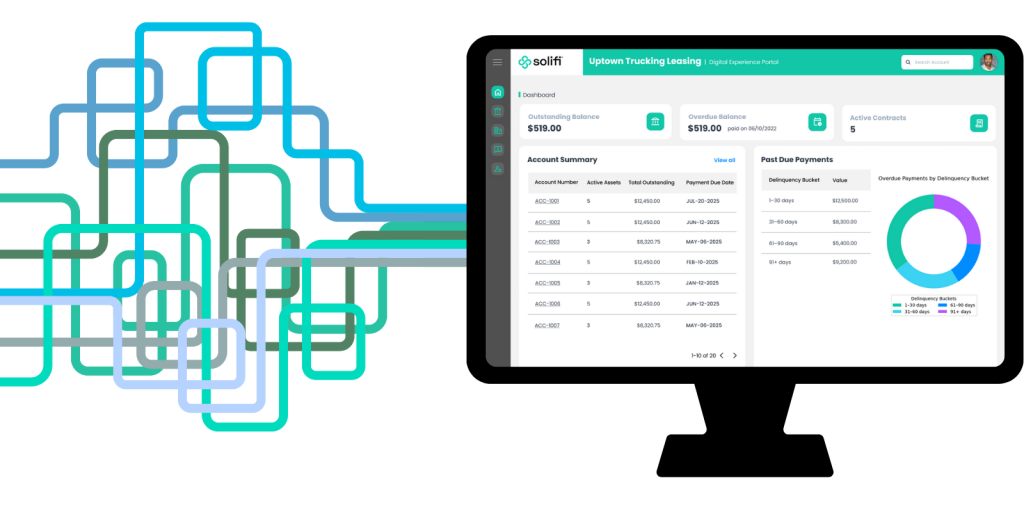
Commercial lenders are no longer debating whether a portal belongs in the customer experience. They are debating whether their digital experience is strong enough to protect relationships, reduce friction, and help clients complete real work without waiting on a call back.
That distinction matters, because commercial expectations have changed. In equipment finance and broader secured lending, buyers are increasingly digital first, completing much of their research and decisioning before ever engaging a lender directly. When the experience is not self-directed, lenders lose momentum, and relationships that should be strengthening can quietly stall.
At the same time, business borrowers have expanded their expectations for anytime, anywhere digital experiences beyond retail banking into commercial lending. Across industries, enterprise platforms have established a clear baseline: self-service means empowering customers to securely access information and complete routine tasks independently through intuitive, governed experiences.
The category shift from account viewing to task completion
Most portals in finance began as online account viewing tools. Useful, but limited. Today, the standard is shifting toward interaction-led servicing that supports real workflows, from document exchange and service requests to approvals and issue resolution, all within a controlled digital experience.
This shift reflects the reality of commercial relationships, which are inherently complex. Multiple stakeholders require different levels of access. Transactions carry high value and strict audit requirements. Requests are often time sensitive. And customers expect consistent service and branding across products and regions. When a digital experience does not help customers complete tasks, it fails to reduce cost to serve and falls short of improving the experience where it matters most.
Why this matters now for secured finance and commercial lending
For lenders, the implications are increasingly clear.
Client experience has become a growth lever. Gaps in digital expectations introduce churn risk and slow expansion opportunities.
Support cost is no longer confined to the back office. Manual servicing for routine inquiries continues to drive unnecessary operational expense.
Fragmentation erodes confidence. When customers cannot clearly understand the full relationship across loans, leases, and lines, even technically sound systems can appear disjointed.
Solifi’s point of view
At Solifi, we believe self-service in secured finance should function as an engagement and interaction layer, not a static window into account data. Effective digital experiences are designed around actions, governance, and continuous improvement, because the portal experience is where commercial relationships are shaped day to day.
This perspective is why we built Experience Hub and why we see it as a foundational component of modernization in secured finance.
Learn more about Experience Hub and how it supports always-on commercial engagement.